Corrosion Handbook expanded and updated
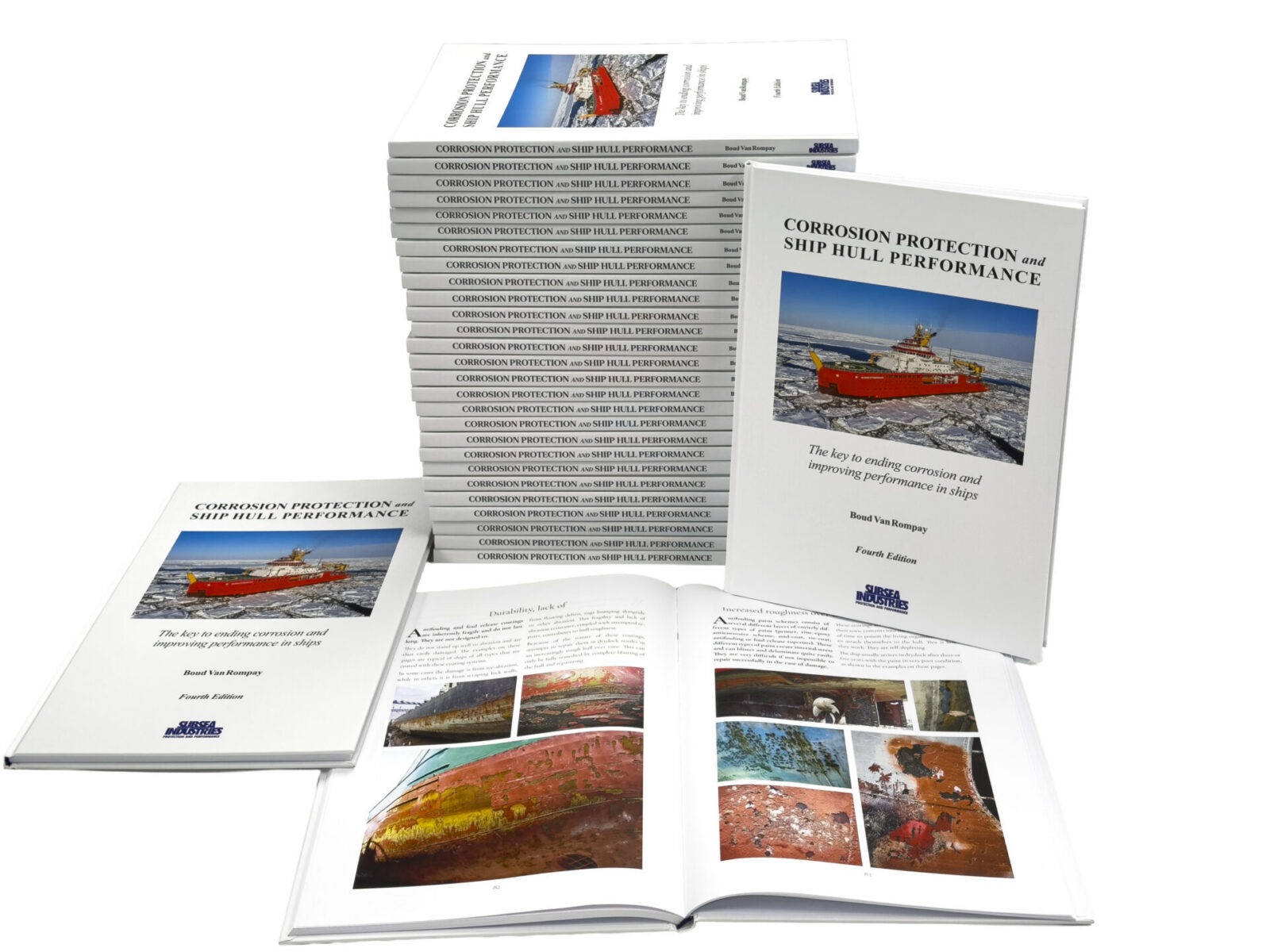
The Corrosion Handbook for Shipowners and Operators – The use of special coatings to protect ships from corrosion has grown and become Corrosion Protection and Ship Hull Performance – The key to ending corrosion and improving performance in ships.
What’s new?
The old and new titles say it all. What began as a practical manual devoted entirely to the protection of ships from corrosion by the use of special coatings, has been expanded to also embrace improving ship hull performance through the use of the correct hull coating and its proper maintenance.
The original Corrosion Handbook has proved very popular. We have had thousands of requests for the book and in fact ran out of copies. Because we had to reprint, we decided to overhaul the content and add to it our knowledge of and success in the field of ship hull performance through coatings and coating maintenance. This is quite extensive.
Ship hull performance system
In the late 1990s, we developed a performance-based coating system which has several properties that are unique in the industry:
The coating
- is applied to the hull and running gear once and lasts the life of the ship.
- is completely non-toxic to the marine environment.
- can be cleaned and any degree of fouling can be removed in or out of the water without any harm to the coating or to the marine environment.
In order to describe this coating system and its advantages, accompanied by case studies and comparisons to other hull coatings, an entire section has been added to the book: PART II COATING SYSTEMS: SHIP HULL PROTECTION AND PERFORMANCE.
This new part of the book goes into details of the problems that a ship hull coating system must solve and offers tried and tested solutions to these problems.
The problem
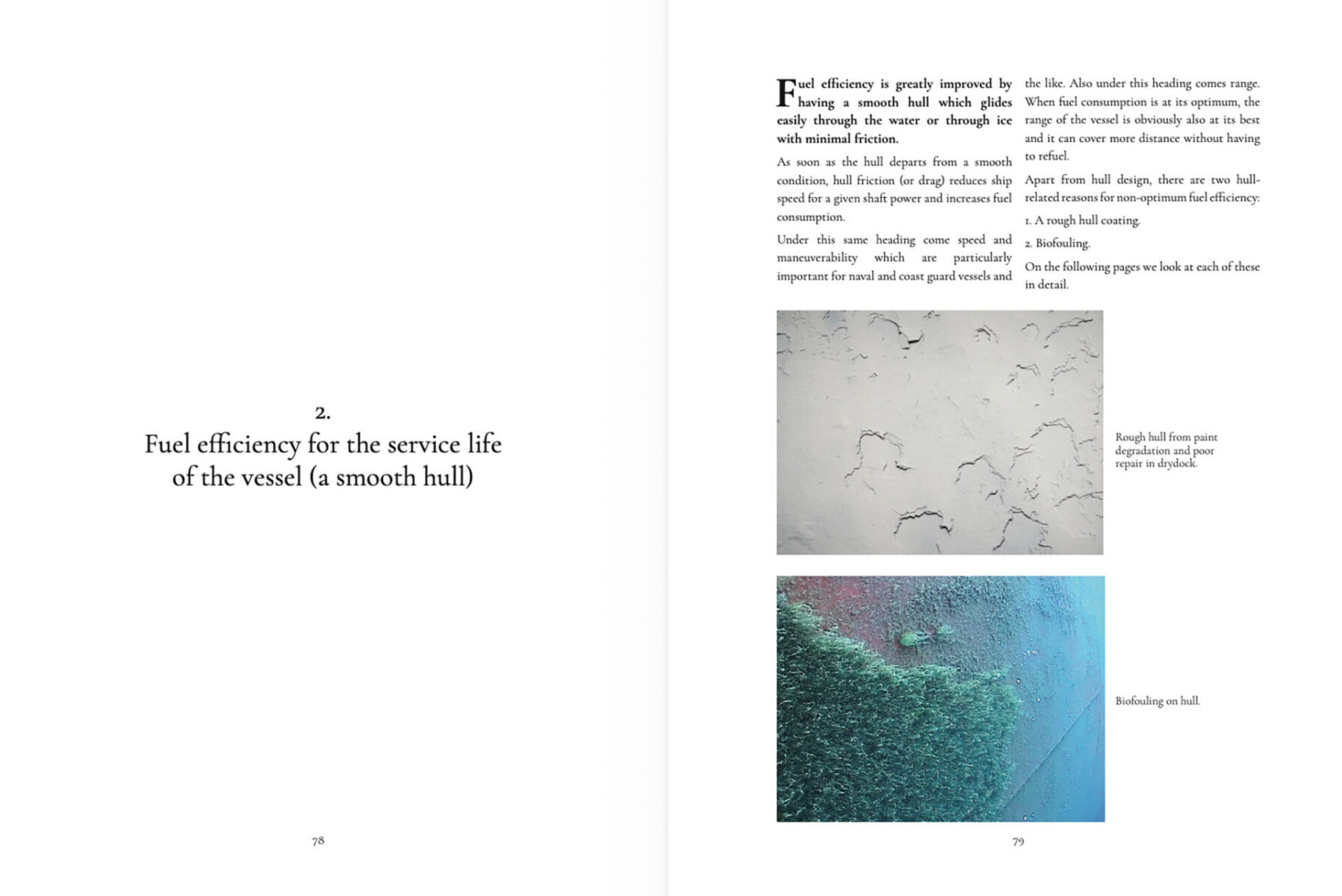
The effects of a rough ship hull on the ship’s speed, fuel efficiency and maneuverability have long been known. Various studies have been carried out by competent scientists and engineers and the effects of a rough hull coating and marine fouling have been quantified and described. As discussed in the book, hull friction can be greatly increased by rough paint and/or biofouling.
What has been lacking is a solution to theses problems which is not harmful to the marine environment. For a while, TBT was used to prevent fouling. It was very effective as a means of keeping the hull smooth. Unfortunately, it also was very effective in poisoning, maiming, causing sex changes in and killing marine life far and wide that had nothing to do with the ship’s hull or its efficiency. It was eventually banned but its destructive effects are still with us today.
When TBT was banned, the ship hull coatings industry developed alternatives which work on the same principle but are considered less deadly in their effects on non-target species. Copper, zinc and other metals, combined with a cocktail of biocides were sanctioned by the authorities and are in widespread use. An alternative system based on silicone was also developed, designed to create a slippery surface that fouling would not attach to or, if it did, would easily be washed off. Unfortunately this alternative system was often also quite toxic to the marine environment, as well as being soft and easily damaged. Both these solutions have major drawbacks and are certainly not fully effective. Might they be based on an entirely wrong premise?
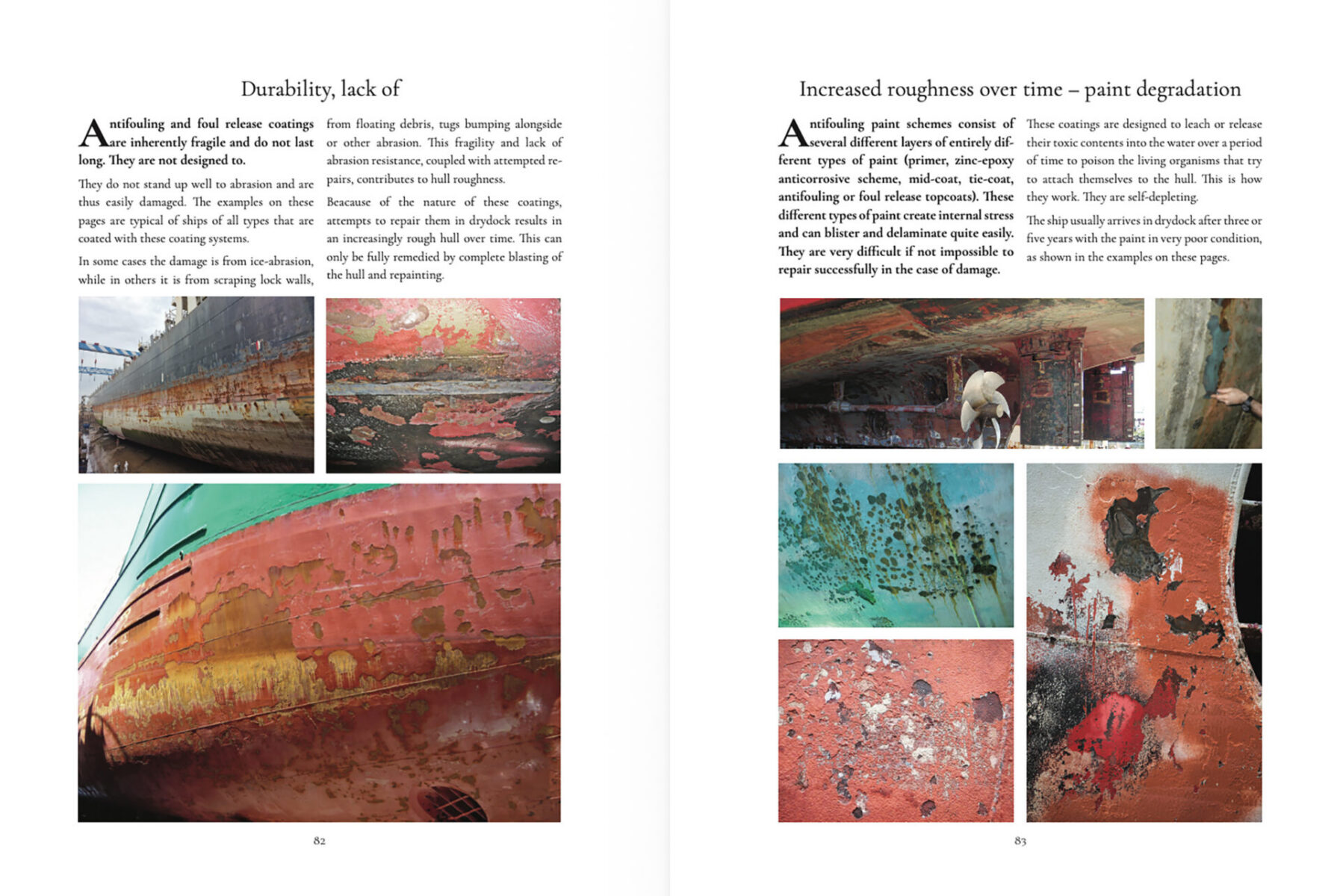
The solution
Subsea Industries introduced a solution to the problem which is based on an entirely different basic principle. If you own a car and you want it to be clean, you clean it! The paint has to be of a type which will not be damaged by the cleaning. And you need to be willing to put in the time and effort required to clean the car.
So with ship hull performance. If you want a clean, smooth hull, rather than a chemical solution, the simpler approach is to clean the hull.
CORROSION PROTECTION and SHIP HULL PERFORMANCE gives a detailed breakdown of the system along with case studies of successful application.
Request a free copy of the book
As with the CORROSION HANDBOOK, CORROSION PROTECTION and SHIP HULL PERFORMANCE is available on request at no charge to you. If you would like a copy, email us with your full name and postal address as well as your company or organization and your position. A digital version is also available. We are keen to get the book into the hands of those who are in a position to take advantage of this technology. If you have one of the earlier editions of the Corrosion Handbook and would like the updated and expanded book, write to us to request it.
You can reach us by email at corrosion@subind.net
We look forward to getting the new, expanded and updated CORROSION PROTECTION and SHIP HULL PERFORMANCE book into your hands.