In the first article in this series, published a year ago, we covered the theory behind an ideal hull coating system for long-term protection of offshore assets. We are following up with some real-world applications.
After all, it is one thing to read about properties and specs on paper and listen to promises and assurances. It is quite another to apply the coating and have the asset sit out there for years and years, exposed to all the corrosive elements of the environment, and see that it really does last the expected time period and continues to adhere to and protect the steel from corrosion year after year without requiring maintenance or replacement.
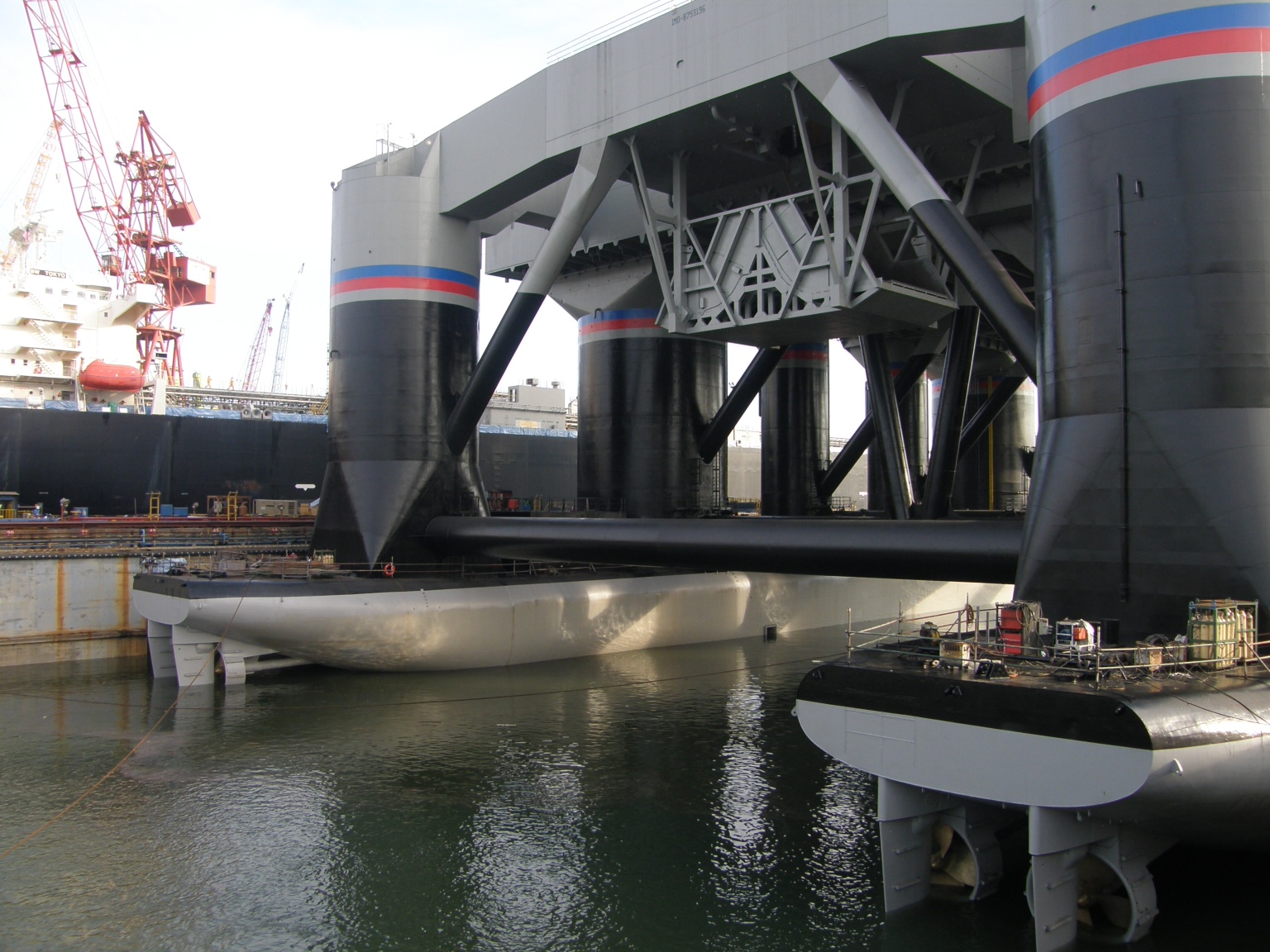
Sea-Launch Odyssey: A converted semi-submersible rocket launcher
The Sea-Launch Odyssey is one of the world’s largest semi-submersible, self-propelled vessels, converted to a floating platform for launching rockets for placing satellites in orbit. It has an unusual operational cycle: lying up in port for months on end, then rapid deployment down the Equator with its control ship, launching of the rocket and return to port. During the lay-up in port, the hull would foul very badly. But the ship needed a clean hull for its run to the Equator, or the fuel bill would be astronomical. With the conventional antifouling coating the ship had, the hull could not be cleaned in port. The coating did not hold up well with this pattern.
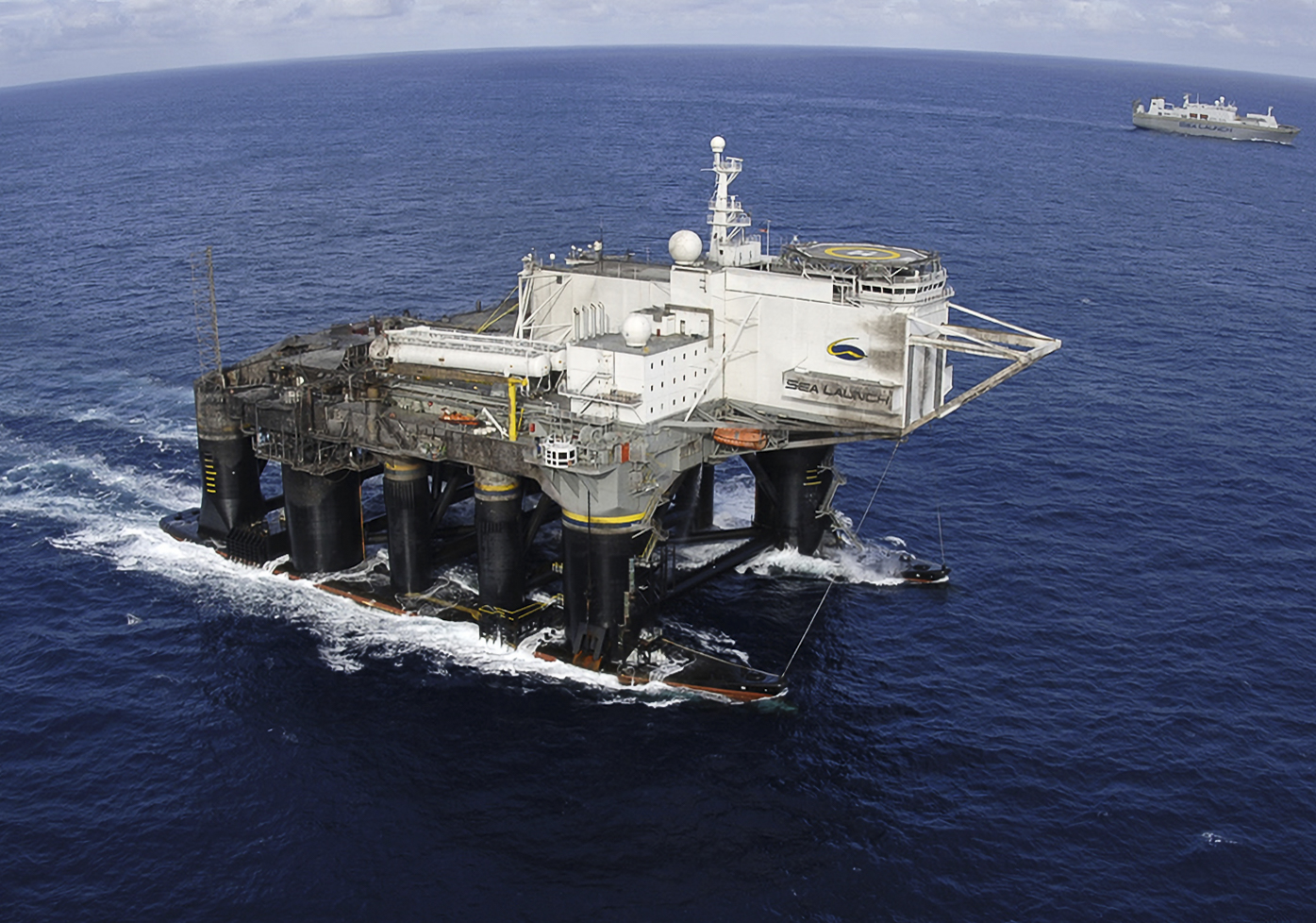
The ship’s senior superintendent Jan Bakke had worked out with class a way to extend the drydock interval to 15 years. The extended drydock interval brought with it the major challenge of properly protecting the hull and controlling biofouling over that period. “When you start cleaning the hull on an antifouling system then you set the clock for docking,” says Jan. The owners also wanted an environmentally friendly coating.
To meet all those requirements – corrosion protection for at least 15 years without drydocking, the ability to withstand hull cleaning without damage to the coating, and an environmentally safe solution – the search led naturally to Ecolock.
An additional benefit was the fact that with Ecolock, cathodic protection, anodes or ICCP, can be dispensed with completely. After several missions had been completed, Jan Bakke was satisfied that all requirements had been met with Ecolock.
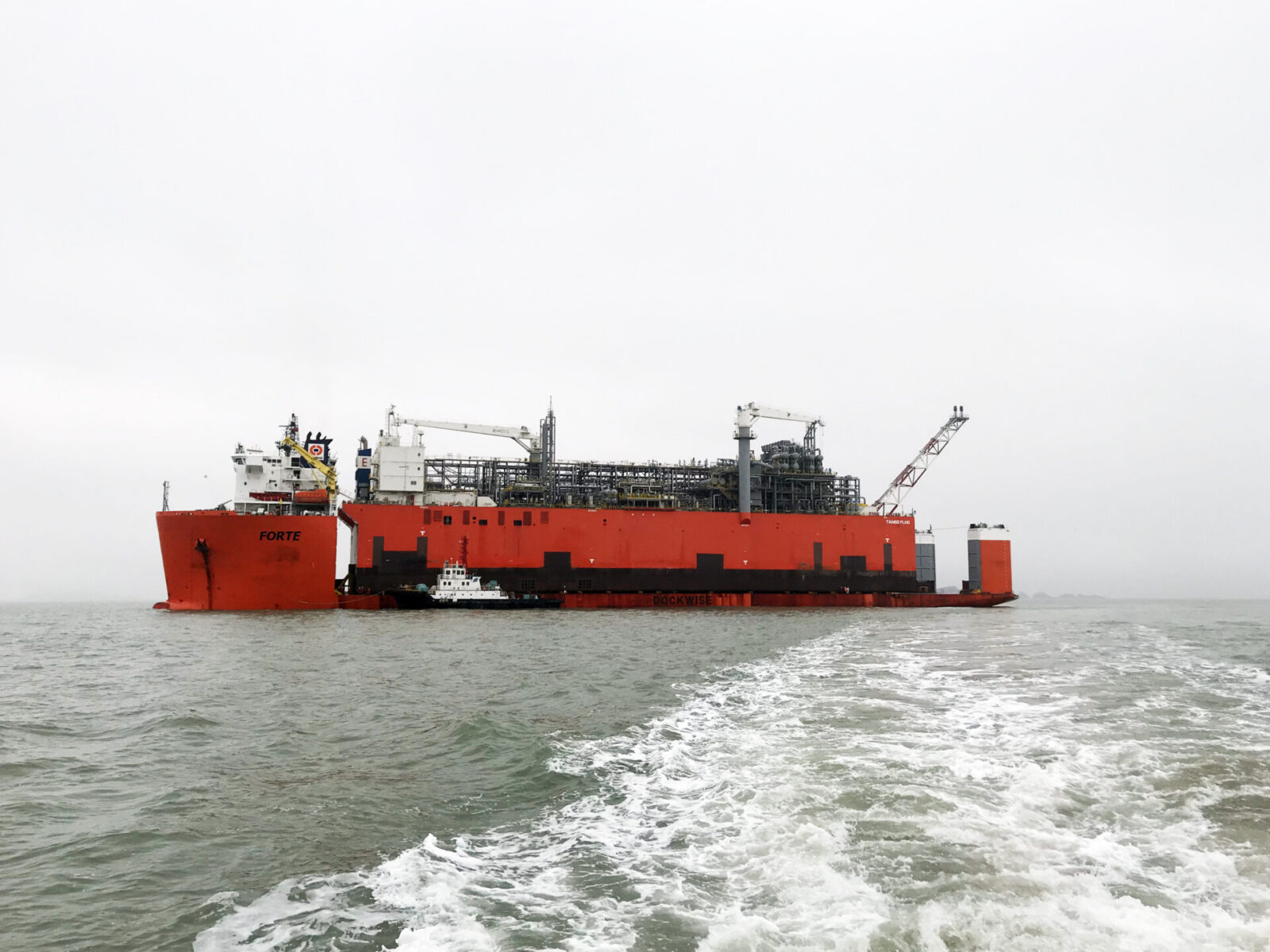
EXMAR Caribbean FLNG (later Tango) and Eemshaven FSRU
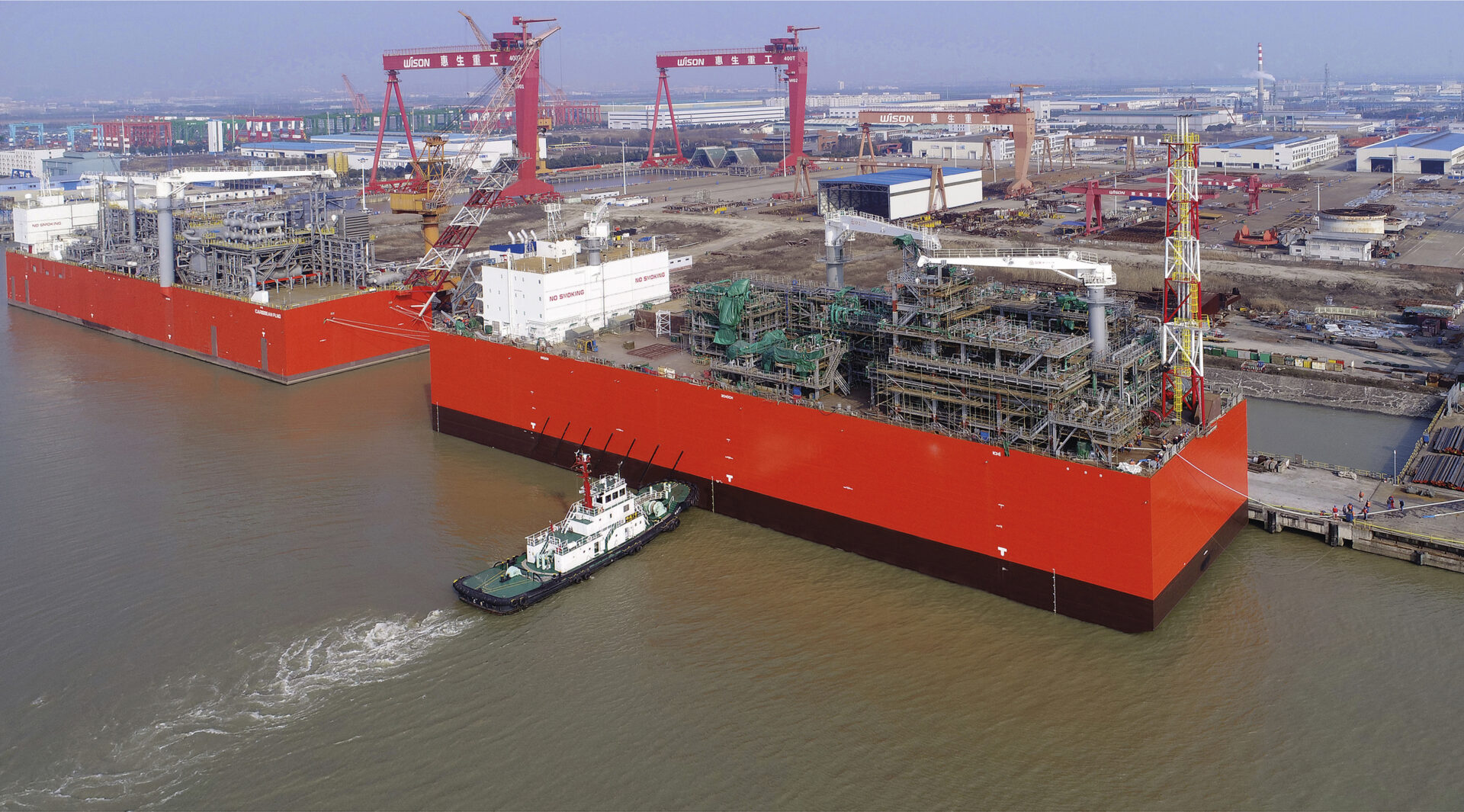
EXMAR was one of the first companies to use Ecolock on offshore assets – the Caribbean FLNG[1] barge and the Eemshaven FSRU[2].
The first of its type, the Caribbean FLNG was built in 2014. “We wanted to select a coating which can ensure that the underwater hull will not corrode for at least 15 years,” said Frederick Van Nuffel, EXMAR Project Manager in charge of the design, engineering and construction of the FLNG barge. In addition to the underwater hull, EXMAR discovered that Ecolock was sufficiently abrasion resistant to replace the rubber fender areas on the barge.
After nine years on station, the Caribbean (renamed Tango) FLNG was sold. It went to drydock in Dubai. The hull coating was found to be in excellent condition.
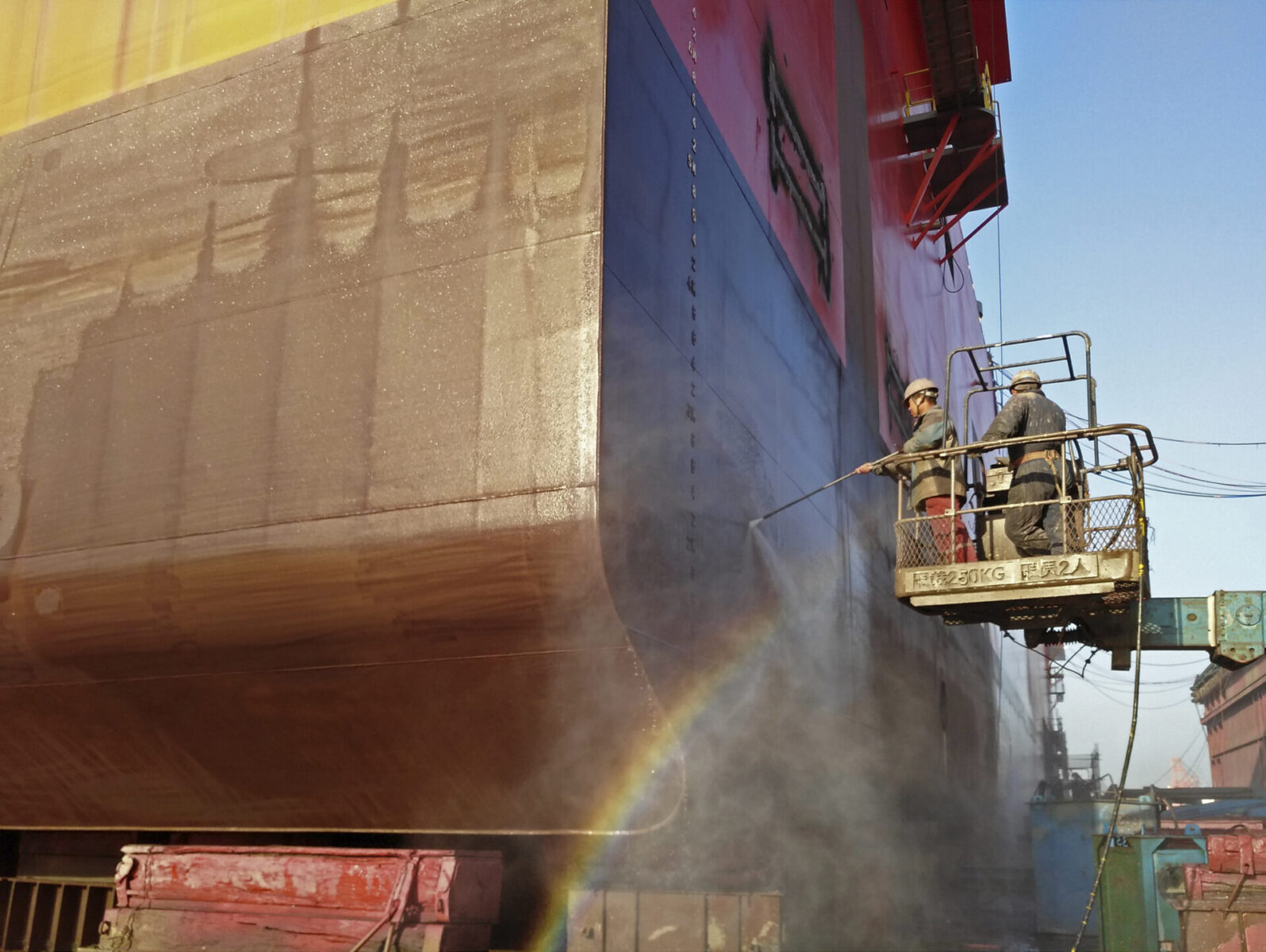
In 2015, EXMAR built an FSRU in the same Wison shipyard in China. Again, Ecolock was chosen for the hull. Seven years later the vessel was in drydock for rechartering. The hull was washed down and found to be in perfect condition. All that was needed in the way of repair was to touch up a few mechanical damages. Now renamed the Eemshaven, the FSRU is on duty in Eemshaven in northern Netherlands. No recoating has been needed in 11 years.
LNG tankers converted for storage and regasification
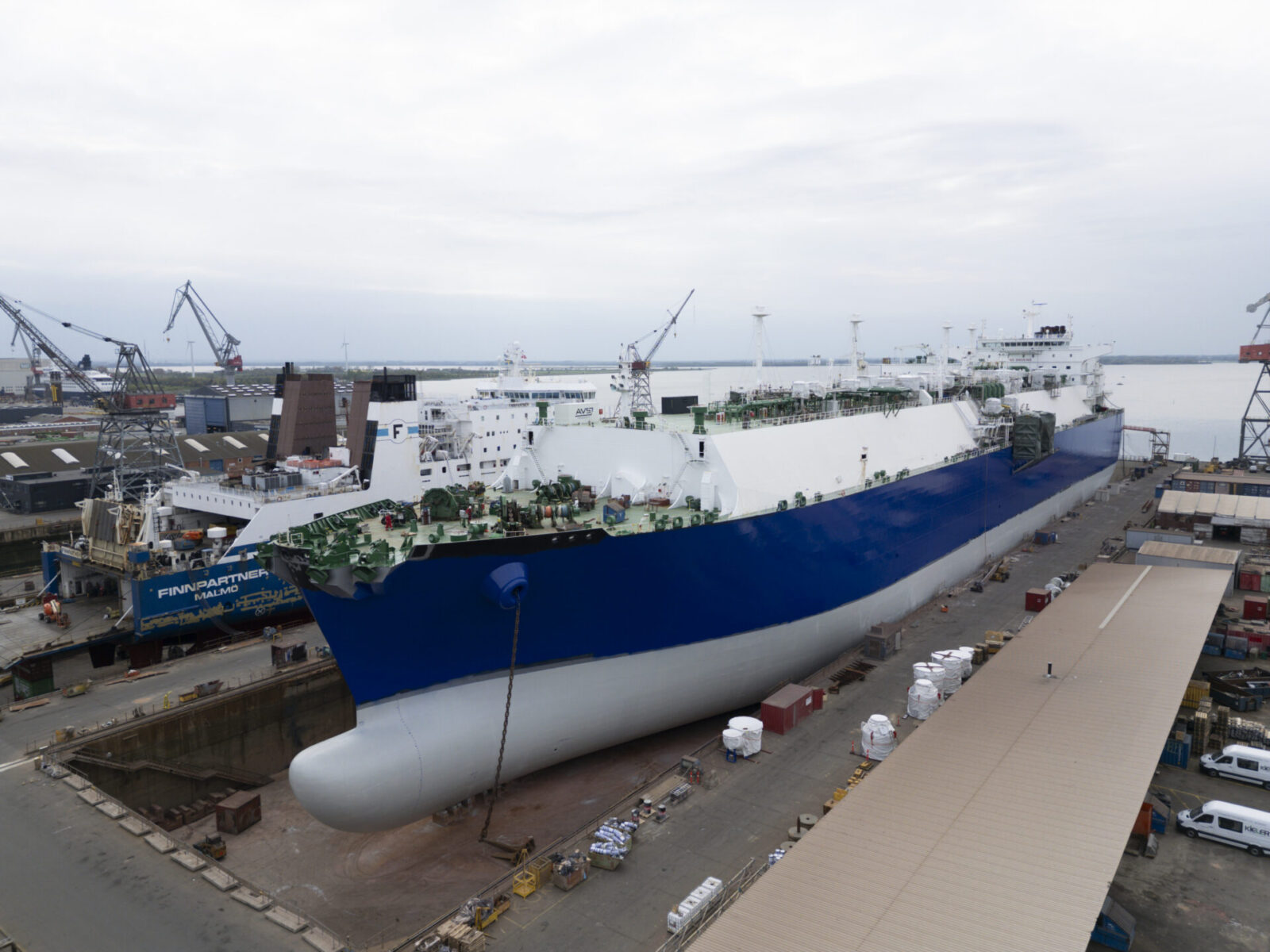
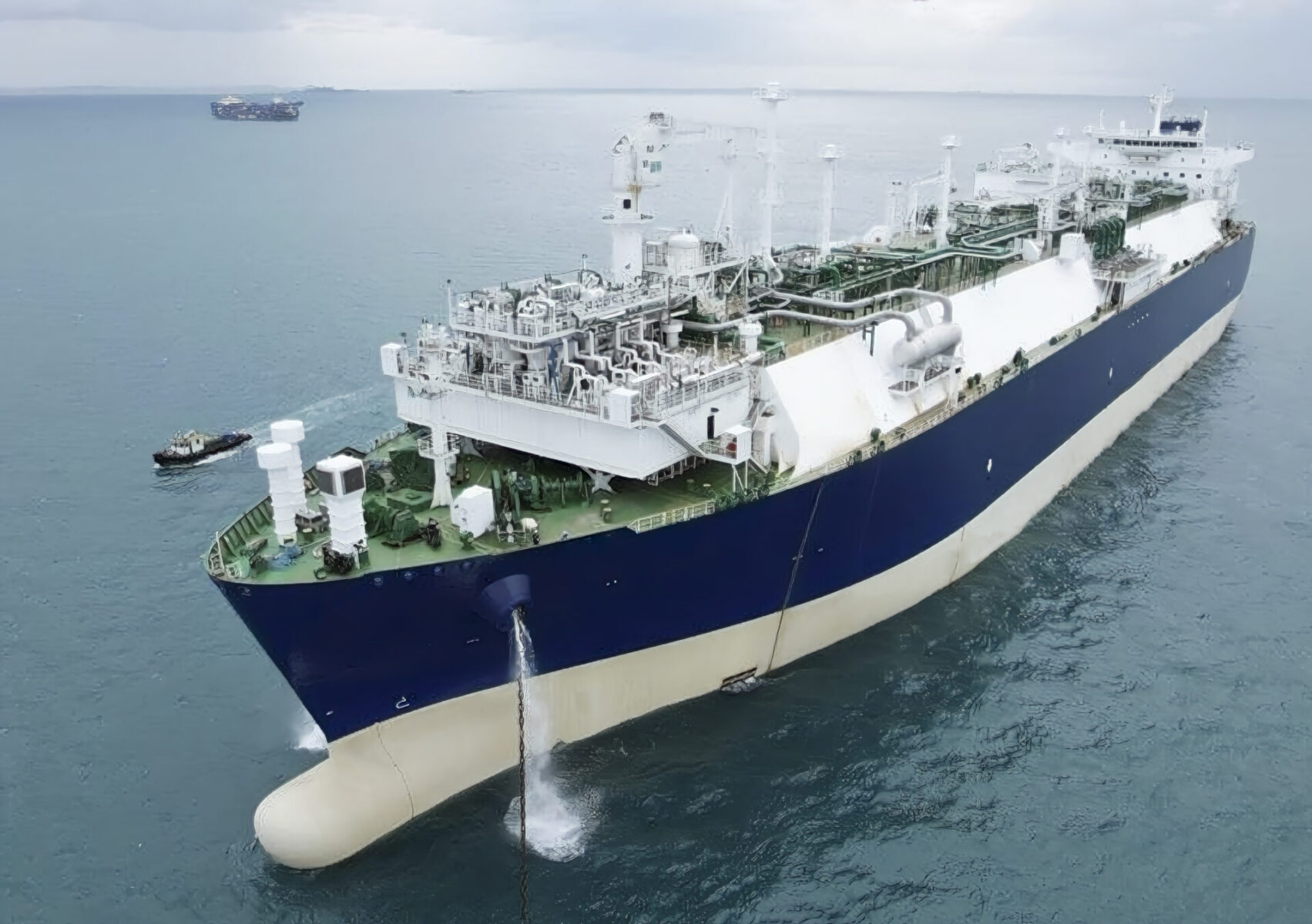
It has become quite a common practice for LNG[3] companies to buy in-service LNG carriers and convert them to static FSUs[4] or FSRUs. The converted vessels are moored or anchored more or less permanently and form an important link in the LNG export and import process.
Several such projects have chosen Ecolock for the underwater hull and in some cases for the entire hull up to the gunwale. There are several reasons which make this choice logical
Ecolock provides complete corrosion protection for decades. The coating comes with a 20-year warranty if two coats are applied and a 35-year warranty if a third coat is applied. Since some of the LNG projects foresee a 25 or even 40-year lifespan without going to drydock, this duration of full corrosion protection is essential.
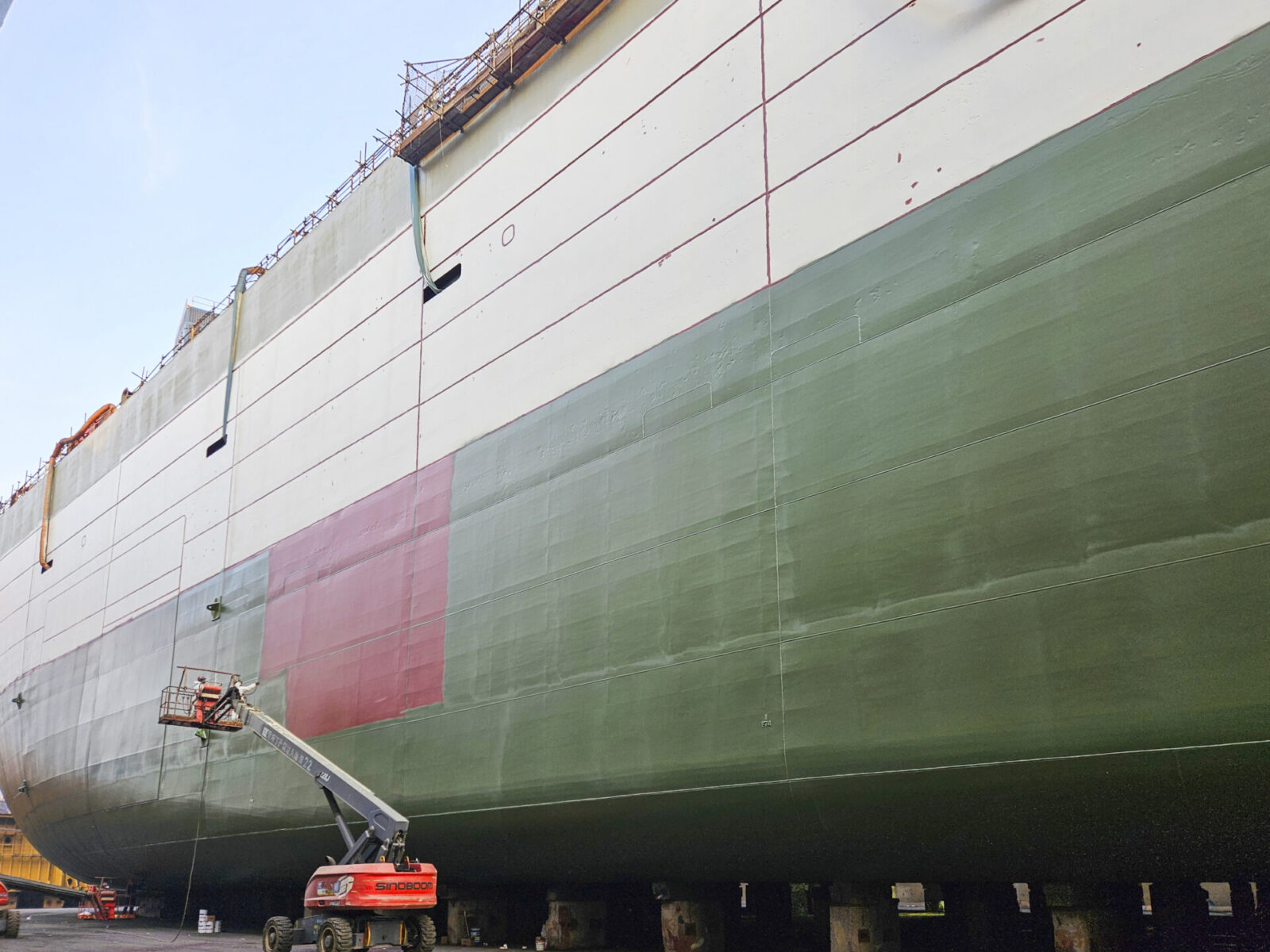
In many cases the newly converted FSU or FSRU has to cross oceans under its own propulsion to reach its intended destination. If the hull is not cleaned before the ship sails, fuel efficiency on the voyage will be very low and there is a risk of transferring invasive aquatic species to its new home. With Ecolock, the coating can be cleaned in the water and any degree of fouling removed without any damage to the coating or the environment, avoiding both problems.
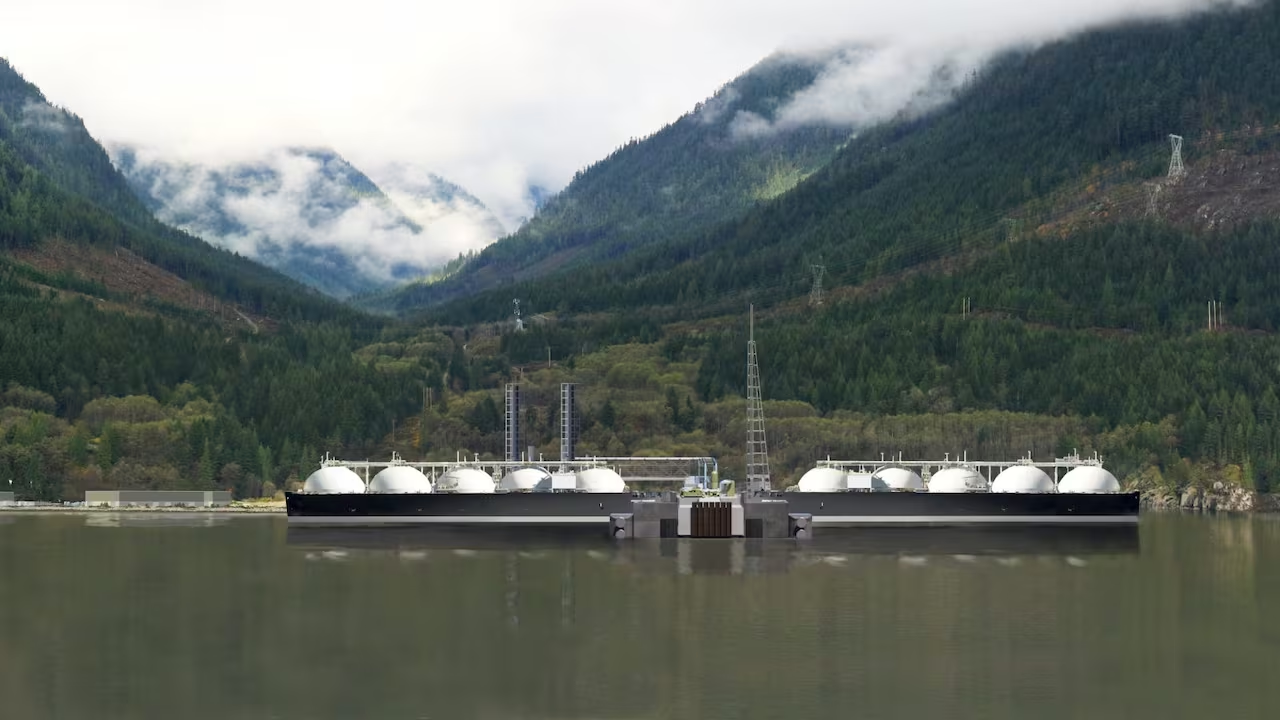
The coating is completely non-toxic. In the case of an LNG facility being built off the coast of British Columbia to which two of the ships coated with Ecolock are destined, the land is owned by 1st Nation Canadians who were insistent on a non-toxic hull coating so as not to risk the contamination of the local sediment by toxic coatings such as antifouling.
Ecolock can be used in lieu of cathodic protection. This means that sacrificial anodes and ICCP systems do not need to be installed or maintained where Ecolock is used for the hull coating. This has been reported by many customers and recently validated by ABS.
Ease of application and repair. Ecolock is quick and easy to apply, consisting only of two or at most three layers of the same coating applied directly to bare steel. Overcoat time is around three hours minimum and there is no maximum, allowing for great flexibility in the yard.
+ POOL
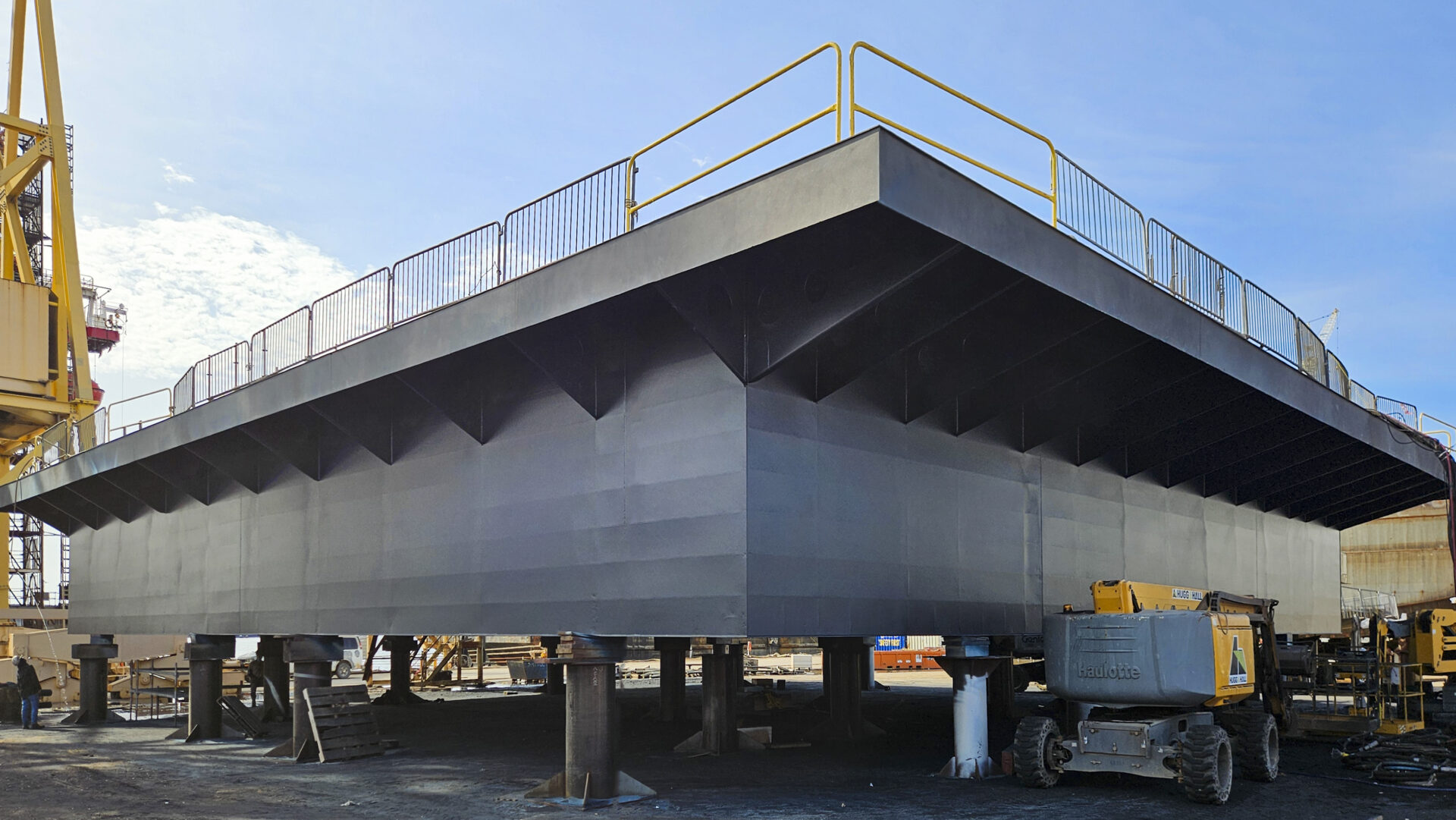
An unusual project for which Ecolock was ideally suited is the + POOL project in New York. What began as an idea for a plus-shaped, water-filtering floating swimming pool in the Hudson River in New York City, conceived by a small group of designers, has launched an international movement to restore the utility of urban waterways.
The more than 320-ton floating steel structure features a 1,745 square foot pool consisting of a stainless-steel shell with a reinforced PVC membrane liner. The pool slopes from 4 ft to 7 ft, (with an average depth of 4.76 ft), and holds 62,126 gallons (8,305 cubic ft) of water, replenished from the surrounding river water every 1 to 2 hours.
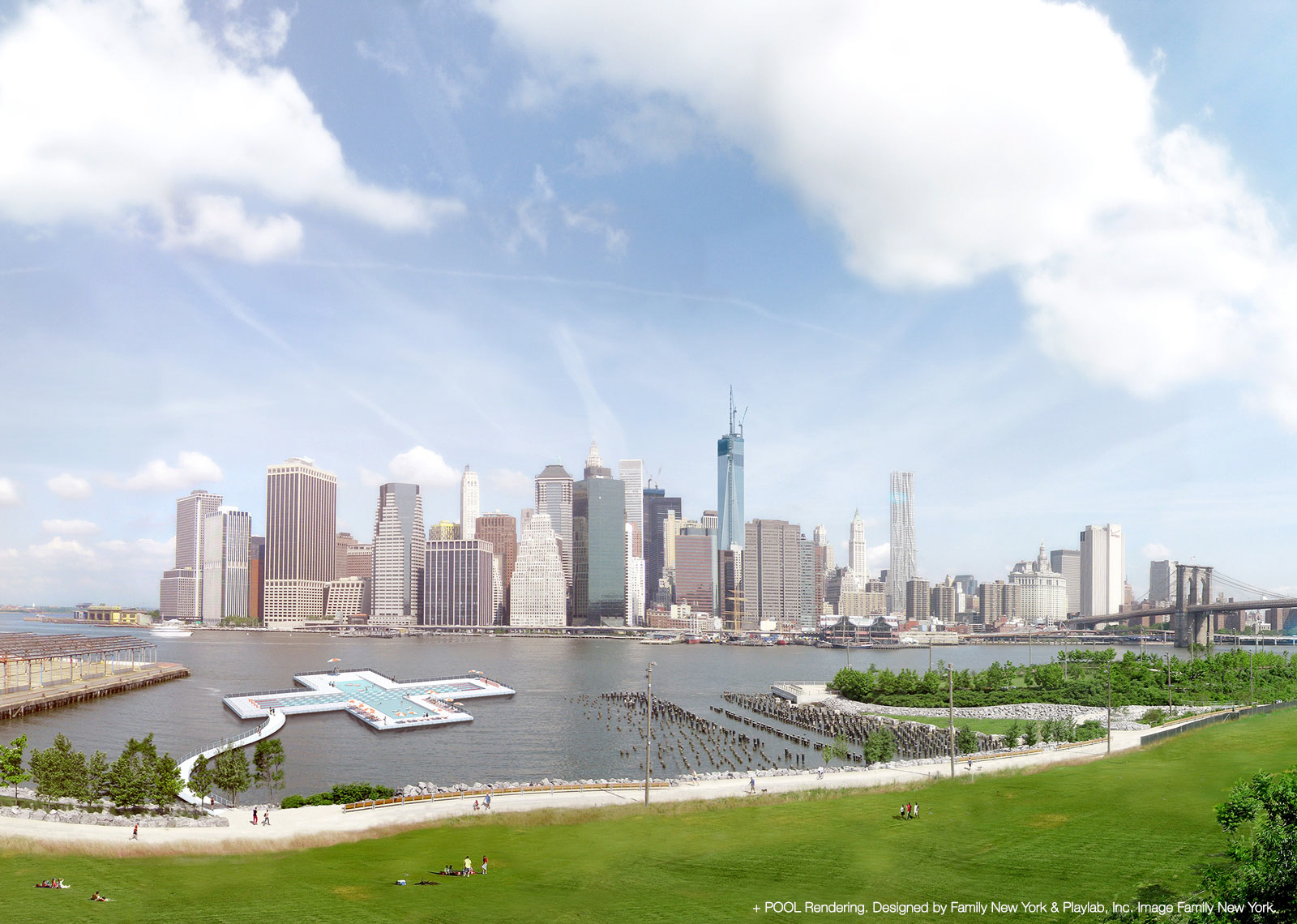
The underwater hull and exterior of + POOL are coated with two layers of Ecolock which is perfect for the project due to its long-lasting durability, its non-toxic nature, cleanability and the fact that + POOL were able to have it in the color of their choice.
Ecolock has been in use on offshore assets for 15 years with excellent results.
[1] Floating Liquefied Natural Gas
[2] Floating Storage and Regasification Unit
[3] Liquefied Natural Gas
[4] Floating Storage Units